The phrase “taxation without representation” became one of the most powerful and unifying grievances in the American colonies during the 1760s and early 1770s. It captured, in a simple and direct way, a deeper constitutional and political conflict between the colonies and Britain. Whilst disputes over taxation were not new, the intensity and meaning attached to them in this period transformed a series of policy disagreements into a broader crisis that helped set the stage for the Boston Massacre and, eventually, the American Revolution.
Following the costly French and Indian War (1754–1763), Britain faced significant debt and sought to reorganize and tighten control over its empire. From the perspective of Parliament, it seemed reasonable that the American colonies should contribute more directly to the costs of their own defense and administration. This led to a series of new measures, including the Stamp Act and later the Townshend Acts, which imposed taxes on goods such as paper, glass, and tea.
For many colonists, however, the issue was not simply the financial burden of these taxes but the principle behind them. Colonists argued that, as English subjects, they possessed certain rights, including the right to be taxed only by their own elected representatives. Because they had no direct representation in Parliament, they saw these taxes as illegitimate. British officials countered with the doctrine of “virtual representation,” claiming that Parliament represented the interests of all British subjects, whether they voted for its members or not. This argument was widely rejected in the colonies, where local assemblies had long exercised authority over taxation and internal affairs.
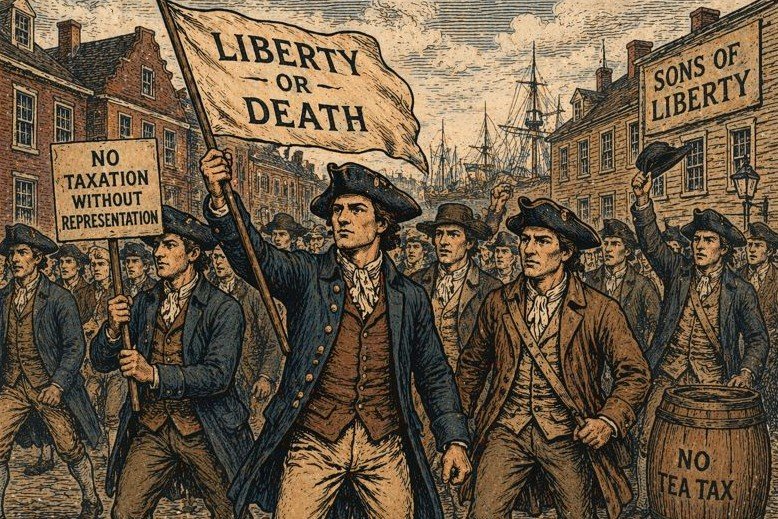
The slogan “no taxation without representation” thus became more than a complaint about specific laws but rather it was a statement about political identity and rights. It framed the conflict in terms that resonated across different social groups, from merchants affected by trade restrictions to laborers struggling with economic instability. In cities like Boston, where tensions were already high, this issue took on an increasingly immediate and personal dimension.
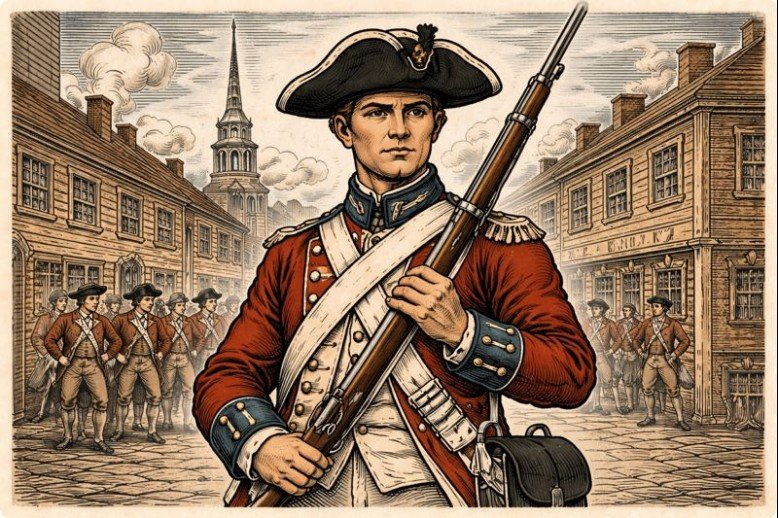
Resistance to British taxation was organized and sustained by groups such as the Sons of Liberty, who mobilized public opinion and coordinated actions such as boycotts and protests. These efforts often brought colonists into direct confrontation with British authorities and soldiers stationed in the city. The arrival of troops in Boston in 1768, intended to enforce customs laws and maintain order, intensified the situation dramatically. For many colonists, the presence of armed soldiers was itself evidence of tyranny—an attempt to impose obedience through force rather than consent.
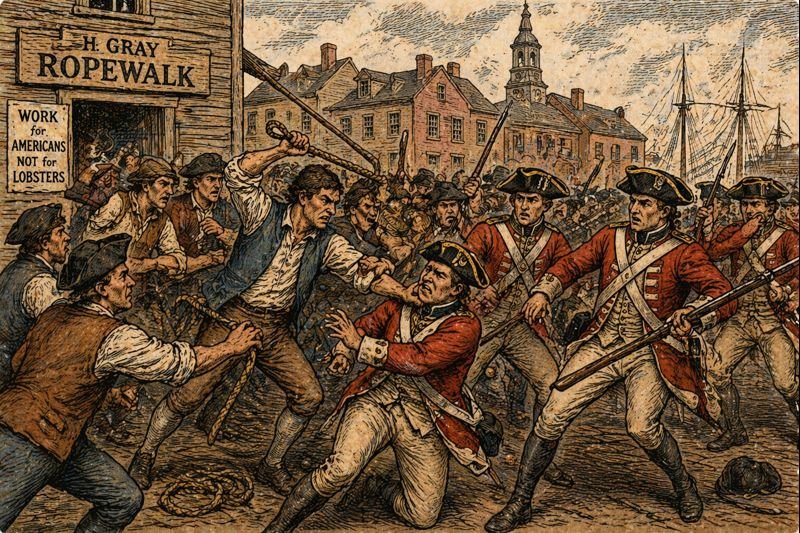
Economic tensions further aggravated the situation. British soldiers, poorly paid and often seeking additional income, competed with local workers for jobs. This led to resentment and occasional violence, most notably in the ropewalk fights of early 1770. These clashes between soldiers and civilians reflected not only economic rivalry but also the deeper political conflict over authority and rights. Each confrontation reinforced existing grievances and made reconciliation more difficult.
By the time of the Boston Massacre in March 1770, the connection between taxation, representation, and military presence had become clear in the minds of many colonists. The soldiers were not seen as neutral enforcers of the law but as agents of an unjust system. When shots were fired into a crowd of civilians, the event was quickly interpreted through this lens. It was not merely a tragic incident but a symbol of what could happen when a government imposed its will without the consent of those that were governed.
Despite this, it is important to recognize that in 1770, the idea of full independence from Britain was not yet the dominant position among colonists. Many still hoped for reconciliation and believed that their rights could be restored within the framework of the British Empire. The repeal of some taxes, such as most of the Townshend duties, temporarily eased tensions and gave hope that compromise was possible.
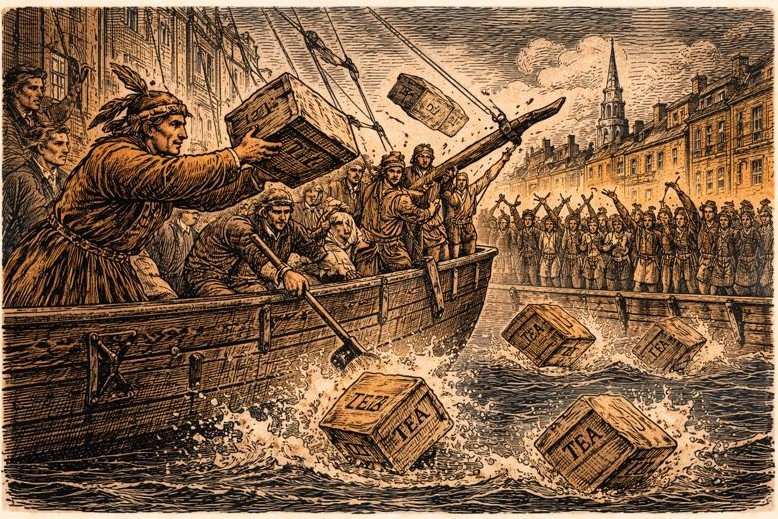
However, the underlying issues remained unresolved. Over the next several years, additional conflicts, such as the Tea Act of 1773 and the subsequent punitive measures known as the Coercive Acts, convinced increasing numbers of colonists that Britain was unwilling to recognize their claims. The escalation from protest to resistance became more pronounced, and the language of rights began to shift toward the language of independence.
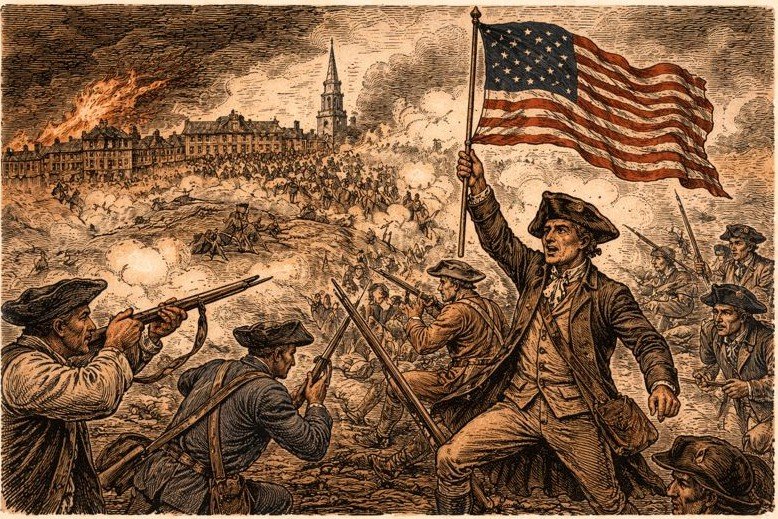
The turning point came gradually rather than at a single moment. By 1774 and 1775, as colonial assemblies coordinated through bodies like the Continental Congress and armed conflict loomed, the idea that independence might be necessary gained broader acceptance. The outbreak of fighting at Lexington and Concord in April 1775 made it increasingly difficult to imagine a return to the previous relationship. Finally, with the publication of Common Sense in early 1776, the argument for independence was presented in a clear and compelling form that reached a wide audience.
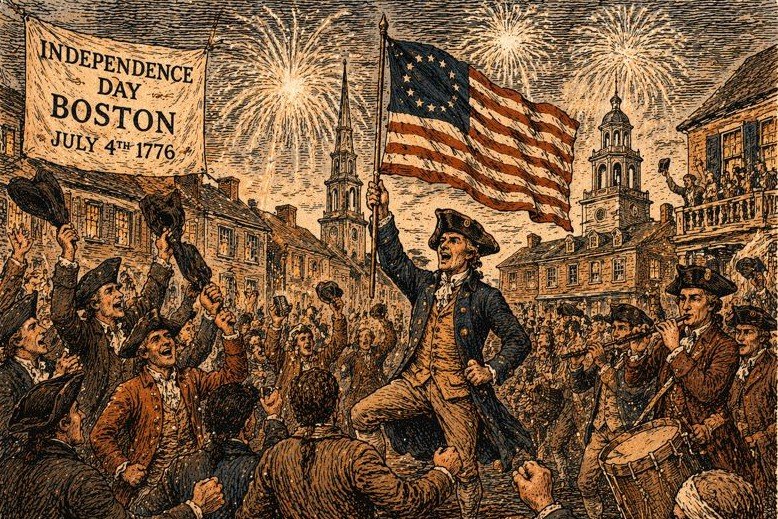
By the time the Declaration of Independence was adopted in July 1776, the shift was complete. What had begun as a protest against taxation without representation had evolved into a full-scale rejection of British authority. The Boston Massacre, shaped by the tensions surrounding taxation and representation, stands as an early and powerful moment in this transformation, a point at which abstract political principles collided with lived experience, and the path toward independence began to take clearer form.