Boston Massacre Books

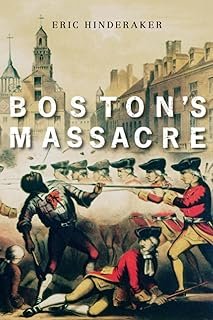
Boston's Massacre

”Boston’s Massacre” by Eric Hinderaker offers a detailed and revisionist account of the Boston Massacre, moving beyond a simple retelling of events to explore how the incident has been understood, debated, and remembered over time. Rather than presenting the massacre as a clear-cut case of British brutality, Hinderaker examines the complexity and ambiguity surrounding the confrontation, emphasizing that what happened on March 5th, 1770, has always been contested.

A central theme of the book is that the Boston Massacre was not just a single event, but a layered historical process involving facts, interpretations, and evolving meanings. Hinderaker structures his analysis around three key elements: the event itself, the competing narratives that emerged immediately afterward, and the ways in which the massacre has been remembered and used in later periods. This approach allows him to show that the “truth” of the massacre is difficult to pin down, as eyewitness accounts were contradictory and shaped by personal and political biases.

Hinderaker places the event within a broader imperial and urban context, highlighting how tensions in Boston had been building for years. The presence of British troops, economic struggles, and conflicts over authority all contributed to a narrative where violence became increasingly likely. He argues that the massacre was not an isolated incident, but the product/result of structural changes within the British Empire, including the normalization of a standing army and attempts to exert tighter control over colonial cities.

Another important contribution of the book is its focus on narrative and propaganda. Hinderaker demonstrates how different groups such as patriot leaders, British officials, and later historians etc., constructed competing versions of the massacre to serve their own purposes. The famous depiction of the event as an unprovoked attack on innocent colonists is contrasted with accounts that emphasize the threatening behavior of the crowd. In this sense, the book shows that the Boston Massacre was as much about storytelling as it was about violence.

Hinderaker also traces how the meaning of the massacre has changed over time. In the 19th century, figures such as Crispus Attucks were reinterpreted in new political contexts, particularly in debates about race and abolition. In more recent history, the event has been invoked in discussions about state violence and protest, demonstrating its continued relevance.

Overall, Boston’s Massacre challenges readers to rethink a familiar historical episode. By focusing on uncertainty, interpretation, and memory, Hinderaker presents the massacre not as a fixed moment with a single meaning, but as an event whose significance has been shaped and reshaped over generations.
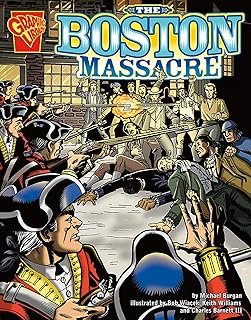
The Boston Massacre (Graphic History)

The Boston Massacre by Michael Burgan offers a concise and visually engaging introduction to one of the most important events leading up to the American Revolution. Written as part of the “Graphic History” series, the book is designed primarily for younger readers, but its accessible format and clear storytelling make it a useful entry point for anyone looking to understand the Boston Massacre in a straightforward and engaging way.

One of the defining features of Burgan’s book is its graphic novel format. Rather than relying solely on traditional narrative text, the story is presented through a combination of illustrated panels and short, easy-to-read captions. This approach allows complex historical events to be broken down into manageable, visually driven sequences. The use of “eye-popping artwork” alongside simplified explanations makes the book particularly effective for reluctant readers or those new to the subject.

The book covers not only the Boston Massacre itself, but also the broader context that led to it. Burgan explores the growing tensions between colonists and British authorities, including disputes over taxation, the presence of British troops in Boston, and rising public unrest. By presenting these developments in a chronological and visually structured way, the book helps readers understand how a series of smaller conflicts escalated into violence.

Another important aspect of the book is its focus on key figures involved in the event. Individuals such as Crispus Attucks, Captain Thomas Preston, and John Adams are introduced in a way that highlights their roles without overwhelming the reader with detail. The graphic format allows these figures to be depicted visually, making them more memorable and relatable.

Burgan also includes additional informational sections, such as timelines, glossaries, and key facts, which reinforce the educational purpose of the book. These features provide readers with a broader understanding of the historical period and encourage further exploration of the topic.

Whilst the book simplifies certain aspects of the Boston Massacre, this is a deliberate choice that aligns with its intended audience. It prioritizes clarity and engagement over deep historiographical debate, making it an effective introductory resource rather than a comprehensive scholarly analysis.

Overall, Burgan’s The Boston Massacre (Graphic History) succeeds in making a complex and pivotal historical event accessible and engaging. By combining visual storytelling with clear, concise narration, it brings the incident of March 5th, 1770, to life in a way that is both educational and compelling.

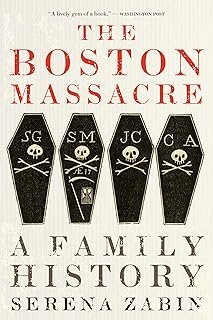
Boston Massacre - A Family History

The Boston Massacre: A Family History by Serena Zabin offers a fresh and highly humanized interpretation of the Boston Massacre, moving away from traditional narratives that frame the incident/event purely as a political clash between colonists and British authority. Instead, Zabin presents what she describes as a “people’s history,” focusing on the everyday relationships that existed between British soldiers and Boston residents in the years leading up to 1770.

A central argument of the book is that the massacre cannot be fully understood without recognizing how intertwined these communities had become. British soldiers were not isolated occupiers; many lived among civilians, rented rooms, worked side jobs, and formed personal connections with locals. Some soldiers even brought wives and children with them from overseas, while others married Boston women after arriving. These relationships created a shared social environment in which soldiers and colonists were not always adversaries, but neighbors.

Zabin emphasizes that these close, everyday interactions made the eventual violence more tragic and complex. The Boston Massacre, in her view, was not simply the result of ideological conflict over taxation or governance, but also the breakdown of these personal ties. When violence erupted on March 5th, 1770, it shattered relationships that had developed over years, turning neighbors into enemies almost overnight.

Another key contribution of the book is its challenge to familiar, polarized interpretations of the event. Rather than portraying the British as outright villains and the colonists as purely innocent victims, Zabin highlights ambiguity and contradiction. She draws on letters, diaries, and official records to show how different individuals experienced the incident in vastly different ways. This approach underscores how both sides were embedded in a shared social world, making the conflict more personal and less clear-cut than traditional accounts suggest.

Zabin’s focus on families, both literal and metaphorical, also adds depth to the narrative. The term “family history” reflects not only the presence of soldiers’ wives and children, but also the broader idea of the British Empire as a kind of extended family. The breakdown of relationships in Boston can therefore be seen as part of a larger imperial fracture, where loyalty, identity, and belonging were increasingly contested.

Overall, Zabin’s book reframes the Boston Massacre as a deeply human story rather than a simple political turning point. By exploring the personal connections that existed before the violence, she reveals how the American Revolution was not only a struggle over rights and power, but also a rupture in the everyday lives of people who had once shared a common world.

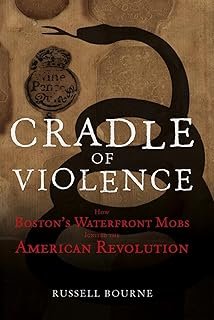
Cradle Of Violence

Cradle of Violence: How Boston’s Waterfront Mobs Ignited the American Revolution (2006) by Russell Bourne offers a distinctive and provocative reinterpretation of the origins of the American Revolution, particularly in relation to the Boston Massacre. Rather than focusing on elite political leaders such as Samuel Adams or John Hancock, Bourne shifts attention to the working-class populations of Boston’s waterfront, sailors, dockworkers, laborers, and the urban poor, arguing that they were the true driving force behind revolutionary unrest.

A central argument of Bourne’s book is that these “waterfront mobs” played a decisive and often overlooked role in shaping resistance to British authority. According to Bourne, their spontaneous and frequently violent actions, ranging from riots and street fights to attacks on customs officials, helped push colonial society toward confrontation with Britain. These individuals, often marginalized in traditional histories, were the ones who physically resisted British policies, using direct action rather than political debate to express their grievances.

Bourne places particular emphasis on the economic and social conditions that fueled this unrest. Many of these waterfront workers faced chronic unemployment, poverty, and exploitation, and they were especially vulnerable to practices such as impressment by the Royal Navy. Their resentment toward British authority was therefore rooted not only in abstract political ideas, but in immediate and personal struggles for survival. This perspective reframes the revolutionary movement as being driven, at least in part, by class tensions and economic hardship rather than solely by ideological concerns about taxation and representation.

In relation to the Boston Massacre, Bourne argues that these same groups were central to the unrest that led to the confrontation. The hostile crowds that gathered in Boston’s streets were not random collections of individuals, but often included members of this waterfront community, already accustomed to resisting authority through collective action. Their confrontations with British soldiers, particularly in disputes over work and public space, helped create the volatile atmosphere that made violence increasingly likely.

Importantly, Bourne challenges the way these individuals were portrayed by contemporaries. Figures such as John Adams, in defending the British soldiers, dismissed the crowd as a disorderly “rabble,” a characterization that influenced later interpretations of the event. Bourne rejects this view, instead presenting these men and women as early agents of resistance whose actions, though often rough and disorderly, were instrumental in pushing the colonies toward revolution.

The book’s broader contribution lies in its reorientation of historical focus. By highlighting the role of ordinary people, particularly those on the margins of society, Bourne expands the narrative of the American Revolution beyond its traditional emphasis on political elites. In doing so, he presents the Boston Massacre not simply as a political flashpoint, but as an event of sustained, grassroots resistance driven by those with the most to lose under British rule.

Overall, Cradle of Violence offers a compelling and sometimes challenging interpretation of the revolutionary era. It suggests that without the कार्रवाइयों of Boston’s waterfront mobs, the tensions that led to the Boston Massacre—and ultimately to independence—might never have reached the point of open conflict.

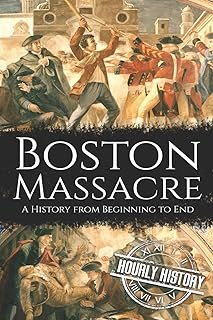
The Boston Massacre - A History From Beginning To End

Boston Massacre: A History from Beginning to End (2020) by Hourly History provides a concise and accessible overview of one of the most important events/incidents leading up to the American Revolution. Designed as an introductory text, the book aims to give readers a clear, chronological understanding of the causes, events, and consequences of the Boston Massacre without overwhelming detail.

A key strength of the book is its focus on simplicity and clarity. It walks readers through the rising tensions in Boston during the late 1760s, including disputes over taxation, the presence of British troops, and increasing hostility between soldiers and civilians. These factors are presented as part of a broader pattern of unrest rather than isolated incidents, helping readers understand how conflict gradually escalated into violence. The book also highlights how everyday confrontations, between workers and soldiers, or crowds and sentries, created a volatile environment where an event like the Boston Massacre became increasingly likely.

Another important aspect of the book is its treatment of the event itself. Hourly History presents the massacre as a chaotic and ambiguous confrontation rather than a straightforward act of deliberate violence. It emphasizes the confusion of the moment, the role of the crowd, and the uncertainty surrounding who fired first. This approach reflects modern historical interpretations that challenge the more simplified, propagandistic narratives that emerged at the time.

The book also examines the aftermath, including the trial of the British soldiers and the role of figures such as John Adams in defending them. By including this legal dimension, it underscores the importance of justice and due process in colonial society, even amid intense political tension.

Overall, Hourly History’s Boston Massacre serves as a useful primer for readers seeking a quick but informative introduction. While it does not offer deep scholarly analysis, its clear structure and balanced presentation make it an effective starting point for understanding both the event itself and its significance in the road to revolution.

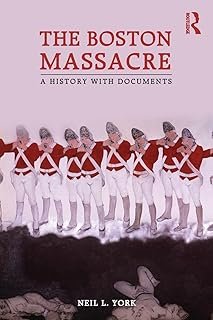
Boston Massacre - A History with Documents

Neil L. York’s The Boston Massacre: A History with Documents (2010) offers a carefully structured and source-driven examination of the Boston Massacre, distinguishing itself from more narrative-driven accounts by placing primary evidence at the center of the study. Rather than simply recounting the events of March 5th, 1770, York’s book invites readers to engage directly with the historical record, allowing them to explore how the incident was experienced, interpreted, and debated at the time.

A defining feature of York’s work is its combination of contextual analysis with a curated collection of original documents. These include newspaper reports, personal letters, eyewitness testimonies, legal records, and the official transcript of the soldiers’ trial. By presenting these materials alongside a clear and concise introduction, York enables readers to see the Boston Massacre not as a fixed narrative, but as a contested event/incident shaped by competing perspectives.

York emphasizes that the massacre itself was the result of mounting tensions in Boston, where British soldiers had faced sustained hostility during their occupation of the city. The confrontation, in his framing, was not simply an act of unilateral aggression but a breakdown of order in a volatile urban environment. This approach aligns with modern historiography, which stresses ambiguity, crowd dynamics, and the role of escalation rather than clear intent.

Another key contribution of the book is its focus on how the massacre was used politically. York highlights how patriot leaders and British officials each constructed narratives to support their positions, turning the incident into a powerful tool in the struggle for public opinion. The inclusion of materials related to propaganda, legal defense, and public commemoration demonstrates how the meaning of the massacre evolved almost immediately after the event occurred.

Importantly, York also addresses the long-term legacy of the Boston Massacre. By examining how it was remembered and reinterpreted over time, he shows that its significance extended far beyond the incident itself. The massacre became a symbol, shaped by memory, politics, and identity, rather than a simple historical fact.

Overall, York’s book is particularly valuable for its emphasis on evidence and interpretation. By allowing readers to engage with primary sources, it provides a deeper understanding of both the event and the ways in which history is constructed.