The Townshend Acts were a series of measures introduced by the British government in 1767 that played a crucial role in deepening the conflict between Britain and its American colonies. While earlier policies such as the Stamp Act had already provoked resistance, the Townshend Acts reignited tensions and helped create the volatile c onditions that ultimately contributed to the Boston Massacre.
Named after Charles Townshend, the Chancellor of the Exchequer, these acts were designed to raise revenue from the colonies through duties on imported goods. Items such as glass, paper, paint, lead, and tea were taxed when brought into colonial ports. Unlike the Stamp Act, which had imposed a direct internal tax, the Townshend duties were structured as external taxes on trade. British policymakers believed this distinction would make them more acceptable to the colonists, who had previously objected to internal taxation. However, this assumption proved to be deeply flawed.
The thinking behind the Townshend Acts extended beyond simply raising revenue. British officials also intended to assert Parliament’s authority over the colonies and to restructure colonial governance. Part of the revenue generated by the duties was earmarked to pay the salaries of royal governors and judges in the colonies. This was a significant shift, as it reduced the financial dependence of these officials on colonial assemblies. By controlling their salaries, Parliament aimed to strengthen imperial authority and limit the influence of local governments, which had become increasingly assertive.
From the British perspective, these measures were logical and necessary. The empire had been expanded and secured at great cost during the French and Indian War, and maintaining that empire required stable revenue and stronger administrative control. Yet in the colonies, the Townshend Acts were seen as a continuation of the same fundamental problem raised by the Stamp Act: taxation without representation. Colonists argued that it did not matter whether the taxes were internal or external; what mattered was that they were imposed without the consent of the governed.
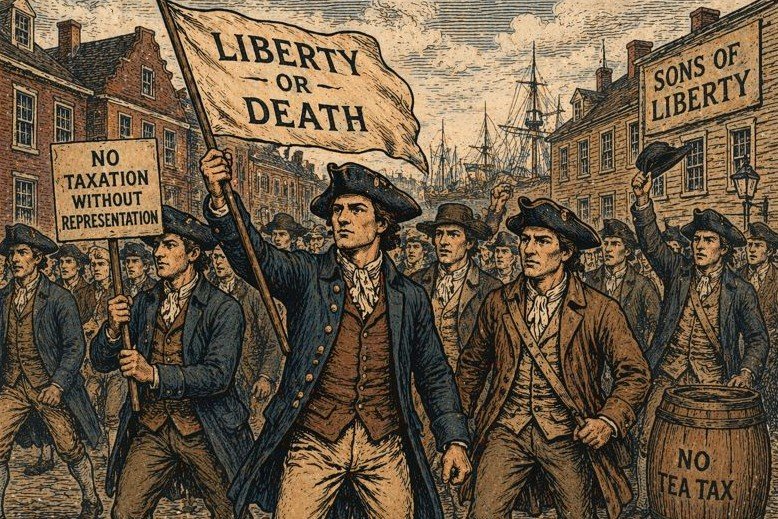
Resistance to the Townshend Acts quickly took shape. Colonial leaders organized boycotts of British goods, encouraging consumers to refuse taxed imports. These non-importation agreements had a significant economic impact, putting pressure on British merchants and, in turn, Parliament. Groups such as the Sons of Liberty played a central role in enforcing these boycotts and mobilizing public support. Merchants who violated the agreements could face public shaming or intimidation, illustrating how economic protest was intertwined with social pressure.
Boston became a focal point of opposition. Its status as a major port city meant that the enforcement of customs duties was highly visible, and conflicts between colonists and British officials were frequent. Tensions escalated further with the establishment of a Board of Customs Commissioners in Boston, tasked with enforcing the new regulations. Smuggling, which had long been a part of colonial trade, became a flashpoint for confrontation, as customs officials sought to assert their authority.
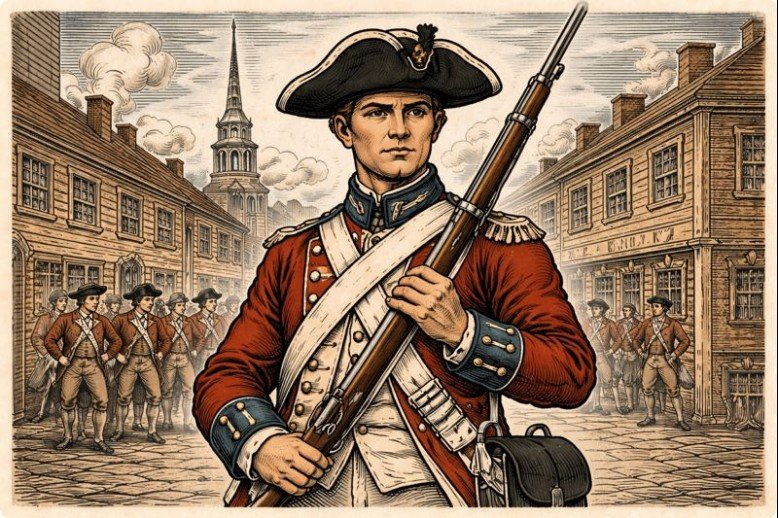
In response to growing unrest, Britain made a critical decision in 1768: troops were sent to Boston to maintain order and support customs enforcement. From the British perspective, this was a necessary step to uphold the law. However, for many colonists, the arrival of soldiers confirmed their worst fears. The presence of a standing army in a civilian population during peacetime was viewed as an instrument of coercion, designed to enforce unpopular policies rather than protect the populace.
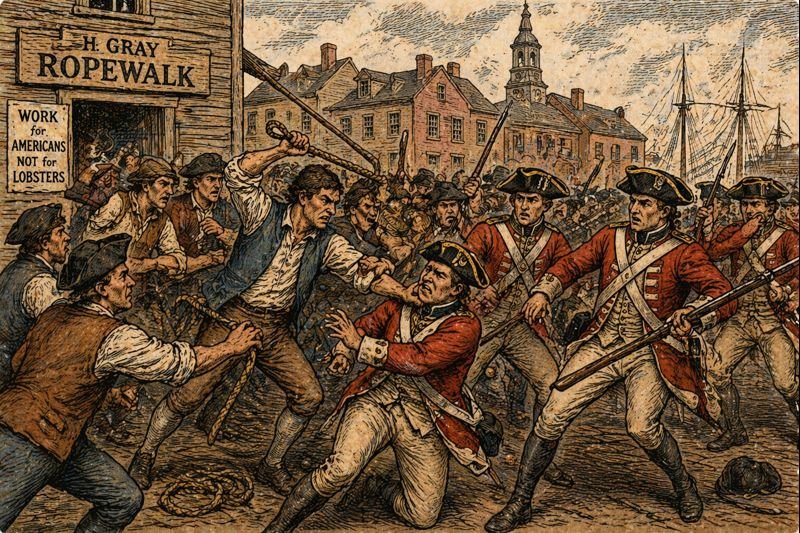
The interaction between British soldiers and civilians in Boston proved to be a constant source of friction. Economic competition added another layer of tension, as soldiers, often poorly paid, sought part-time work in the city. This brought them into direct conflict with local laborers, contributing to incidents such as the ropewalk fights of early 1770. These violent clashes between workers and soldiers highlighted how economic grievances, political disputes, and personal animosities had become deeply intertwined.
By the time of the Boston Massacre in March 1770, the Townshend Acts had already done much to destabilize relations between Britain and the colonies. The taxes themselves were not the sole cause of the violence, but they were part of a broader system that had eroded trust and heightened suspicion. Colonists increasingly viewed British soldiers not as neutral enforcers of law but as agents of an unjust regime. When a confrontation between a crowd and soldiers turned deadly, the event was quickly interpreted as evidence of tyranny.
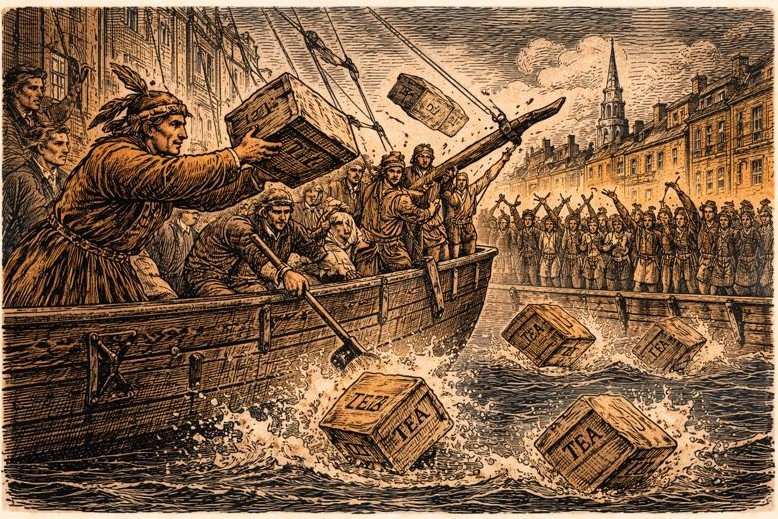
Ironically, by the time the Boston Massacre occurred, Parliament had already begun to retreat from the Townshend policies. Most of the duties were repealed in 1770, with the exception of the tax on tea, which was retained as a symbolic assertion of authority. However, the damage had already been done. The experience of resisting the Townshend Acts had strengthened colonial unity, deepened political consciousness, and reinforced the belief that British policy was fundamentally incompatible with colonial rights.
In this sense, the Townshend Acts were a critical link in the chain of events leading to revolution. They transformed earlier disputes into a sustained conflict over authority and governance, bringing soldiers and civilians into direct and often hostile contact. The Boston Massacre was not an isolated incident but the product of these accumulating tensions, shaped in large part by the policies and assumptions embodied in the Townshend Acts.