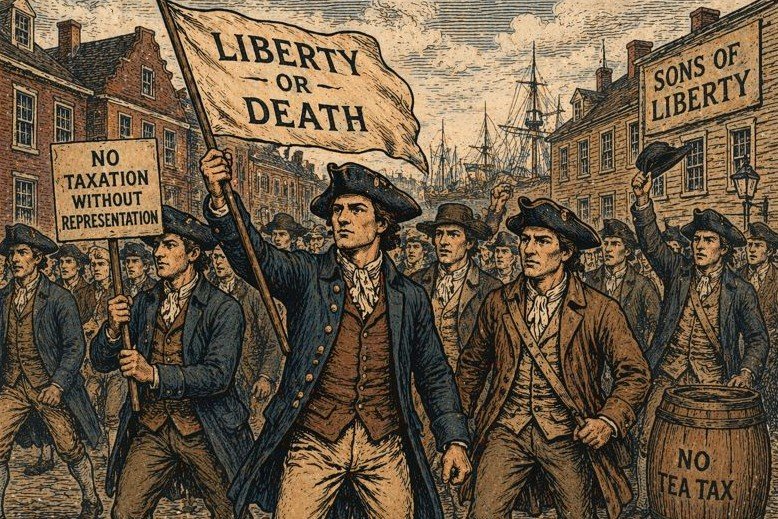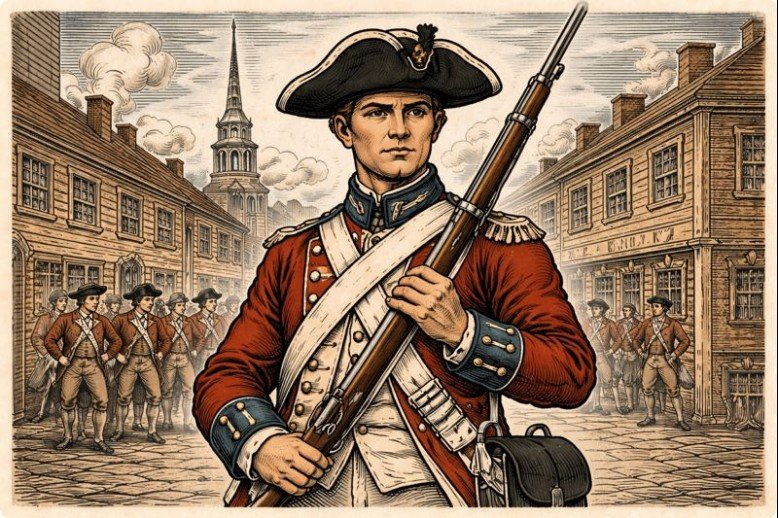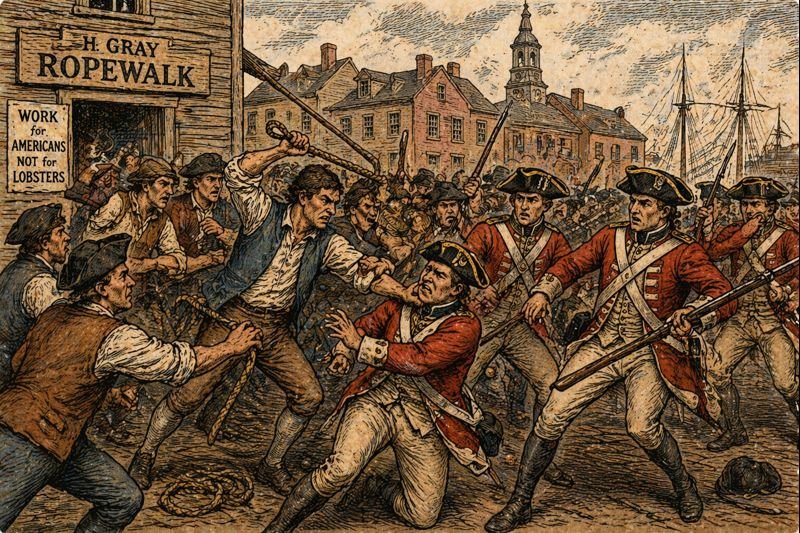
In the aftermath of the Boston Massacre, colonial leaders moved quickly to shape how the event would be understood, both in Boston and across the wider Northa Atlantic world. Whilst the confrontation itself had been chaotic and ambiguous, the narrative that emerged was anything but. Through speeches, pamphlets, newspapers, and visual imagery, the colonists transformed the incident into a powerful piece of political propaganda that depicted British rule as brutal, unjust, and inherently dangerous.
At the center of this effort was the strategic use of print culture. Boston was already a hub of political communication, and patriot leaders understood the importance of controlling the story. Within days of the massacre, accounts began to circulate that emphasized the innocence of the victims and the calculated aggression of the British Soldiers. These narratives were not neutral retellings; they were carefully constructed to evoke outrage and solidarity. Language played a crucial role, with the very term “massacre” framing the event as a deliberate slaughter rather than a spontaneous clash.
One of the most influential pieces of propaganda to emerge from this moment was the famous engraving by Paul Revere. Titled “The Bloody Massacre Perpetrated in King Street,” the image presented a highly stylized and misleading depiction of the event. In Revere’s version, British soldiers stand in a neat, disciplined line, firing a coordinated volley into an unarmed and passive crowd. The colonists are shown as orderly and defenseless, with no indication of the snowballs, sticks, and verbal provocations that had contributed to the escalation. The commanding officer appears to be giving a deliberate order to fire, reinforcing the impression of premeditated violence.
The power of Revere’s engraving lay in its simplicity and emotional clarity. It distilled a complex and confusing event into a stark moral narrative: innocent civilians versus tyrannical soldiers. The image was widely reproduced and distributed throughout the colonies, ensuring that even those who had not witnessed the event firsthand would understand it in these terms. It became one of the most enduring visual symbols of British oppression and played a significant role in shaping public opinion.
It is also worth noting that Revere’s engraving was not entirely original. It was based closely on an earlier work by Henry Pelham, another Boston artist. However, Revere’s version was produced more quickly and distributed more widely, demonstrating not only his skill as an engraver but also his awareness of the importance of timing in propaganda. By being first to market, so to speak, he ensured that his interpretation would dominate the public imagination.
Beyond visual imagery, written propaganda also played a vital role. Patriot leaders, including figures such as Samuel Adams, helped organize the publication of pamphlets that compiled witness testimonies and presented the colonists’ version of events. These accounts were selective in their use of evidence, emphasizing statements that supported the narrative of unprovoked violence whilst downplaying or omitting those that suggested a more complicated situation. The goal was not simply to inform but to persuade i.e., to create a shared understanding that would strengthen resistance to British authority.
Annual commemorations of the massacre further reinforced this narrative. Each year on March 5th, speeches were delivered in Boston that recounted the event in dramatic and moralistic terms. These orations kept the memory of the massacre alive and continually linked it to broader grievances about taxation, representation, and military occupation. Over time, the event took on a symbolic significance that far exceeded its immediate impact, becoming a rallying point for the revolutionary cause.
The effectiveness of this propaganda can be seen in how the Boston Massacre was remembered and interpreted in the years that followed. Although the actual number of deaths was relatively small, the incident was elevated to a defining moment in the struggle against British rule. It helped to unify disparate colonial grievances into a single narrative of oppression and resistance. By portraying the British as aggressors and the colonists as victims, patriot leaders were able to justify continued opposition and mobilize support for their cause.
At the same time, the use of propaganda highlights the complexity of the revolutionary movement. Whilst the colonists were advocating for principles such as liberty and justice, they were also willing to shape and, at times, distort reality to achieve their goals . This doesn’t diminish the legitimacy of their grievances, but it does underscore the role of perception and communication in political messaging.
In the case of the Boston Massacre, propaganda was not an afterthought; it was an integral part of the event’s historical significance. Through images like Revere’s engraving and the coordinated efforts of patriot leaders, a local confrontation was transformed into a powerful symbol of tyranny. This process of interpretation and amplification helped to sustain the momentum of resistance and laid the groundwork for the broader revolutionary movement that would soon follow.